The circular economy, with its emphasis on the recycling, reuse and regeneration of materials, has been a key concept in sustainability circles for many years.
But 2025 was not the breakthrough year for the circular economy in the way some campaigners hoped it might be, particularly after talks to establish a legally-binding international agreement to tackle plastic pollution ended without an agreement in August.
Will 2026 be different? The introduction of new regulations in various countries, emerging AI sorting technologies, and the growing popularity of ‘pre-loved’ or second-hand items could play a part in its growth, according to some experts.
The Ellen MacArthur Foundation’s executive lead for plastics, Rob Opsomer, said over the last 15 years, the circular economy has moved from a concept to an actionable strategy that businesses and governments around the world are embracing, in an email.
Opsomer added a “pioneering minority” has made significant progress in areas like plastic packaging, for example.
He said the signatories of the Global Commitment, representing about 20% of the market, have avoided14 million tonnes of virgin plastics, the equivalent of 1.8 trillion plastic bags, since 2018.
But Opsomer added the remaining 80% of the market is not taking the same action, and systemic barriers that no company can overcome alone stand in the way of further progress.
“It will require bold leadership, but those who step up now will have the opportunity to co-shape the future, stay ahead of regulation, and ensure continued market access, while those who don’t risk being disrupted,” said Opsomer.
Libby Peake, senior fellow and head of resource policy at the Green Alliance, said there has been a “growing public appetite” particularly, in the U.K. for the reuse, sharing and repair of consumer products.
Peake said this has been partially driven by the cost-of-living crisis and popularity of online marketplaces like eBay and Vinted, which allow users to buy and sell preloved items.
Peake said repair cafes, where people can bring items to be restored, are also proving to be popular around the country.
“A lot of this is driven by an increasing frustration with the throwaway society and with products which do not last,” she told me.
“A lot of people do visit repair cafes to fix broken things, save money and also feel a real sense of community.”
Peake said while are also clear mental health benefits from this kind of community volunteering, repair and reuse schemes are also increasingly of interest to businesses as well.
She said British retailers like Screwfix and B&Q are now offering refurbished products to customers alongside new products.
The chief executive and president of the recycling company TOMRA, Tove Andersen said 2026 is “poised to become a pivotal year” for scaling circularity, in an email.
Andersen added technologies which cut waste, policies that push for smarter resource use, and systems that make circular models practical at industrial and city levels will all
He added labour shortages and rising recycling targets are accelerating AI adoption in recycling plants.
And he said with only nine European Union nations are currently on track to meet key municipal and packaging recycling goals by the end of this year (2025), precision sorting has become essential.
Andersen also highlighted the latest Pew Charitable Trust report, which claims plastic pollution is on track to more than double in the next 15 years unless action is taken.
“Deposit return systems are rapidly going mainstream. When designed well, they can capture up to 90% of beverage containers,” said Andersen.
“More than 50 systems are already operating worldwide, with countries like Australia, Germany, Norway, and Canada leading the way and many more joining, highlighting a strong global shift toward circular economy principles for packaging.”
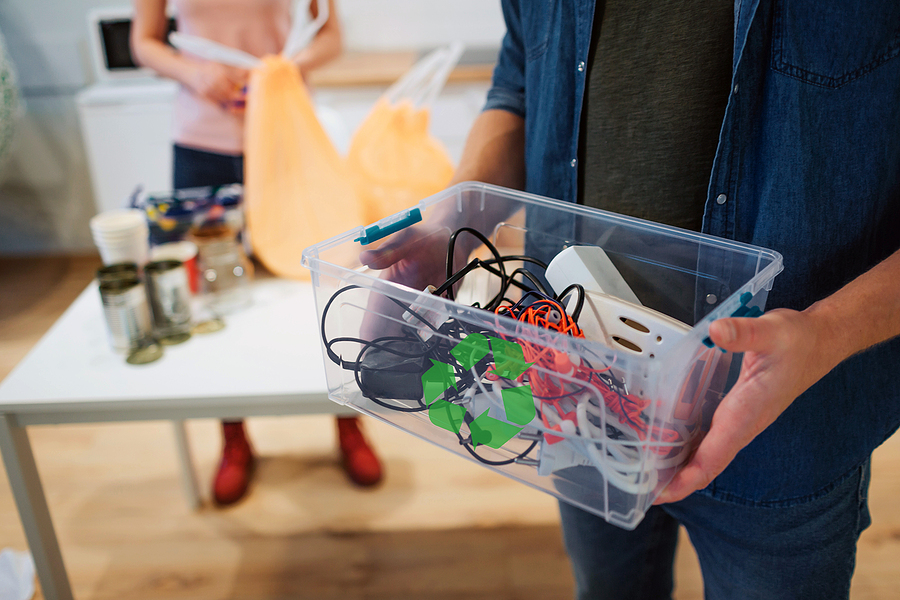
The chairman and chief executive officer of electronic waste recycler ERI, John Shegerian, said electronic waste is still the fastest growing waste stream in the world today and a “perfect fit” for the circular economy, in an email.
Shegerian added consumer electronics will become more meaningfully embedded in the circular economy in 2026 than ever before, driven by breakthroughs in AI, robotics, automated sorting, and highly efficient element extraction.
He said these advances will “turn yesterday’s devices into tomorrow’s raw materials”.
“As a result, ‘cast-aside’ electronics will become one of our nation’s most reliable sources of sustainable supply, and will empower us to extract and refine rare earth elements such as Neodymium, in a clean and efficient way,” said Shegerian.
And Dr. Atalay Atasu, professor of technology and operations management at the INSEAD business school, said the circularity momentum will not slowing down for organizations and economies, which invest in it for the strategic benefits it provides, in an email.
Dr. Atasu added access to critical resources can be more effective via circular solutions on a finite resource planet with geopolitical frictions. Those who invest in circular solutions at scale will continue to benefit.
“Circularity is about business continuity and will remain strategic when it provides tangible value,” he said.